For the 1 in 5 Adults Misdiagnosed with Type 2 Diabetes
You’re doing everything right — and your numbers keep climbing.
If your Type 2 treatment isn’t working the way it should, you’re not failing.
You may have LADA — an autoimmune form of diabetes that affects up to 1 in 5 adults misdiagnosed with Type 2. The free checklist below has the 10 questions to bring to your next appointment.
Your email is safe with us. We never sell your data. View our Privacy Policy.

Trusted by patients, researchers, and diabetes educators.
“Linnea’s words will give readers validation after a frustrating experience trying to get diagnosed.”
— Ginger Vieira · Co-Founder, Diabetes Nerd Network
“Brings together lived experience and actionable guidance in a way that will help readers feel less alone and more equipped to navigate their journey.”
— Dr. Mark Heyman · Author of Diabetes Sucks and You Can Handle It
Does this sound like you?
If you nod at three or more of these, it’s worth asking your doctor a few specific questions.
You were diagnosed with Type 2 as an adult.
You’ve cut carbs, exercised, and taken your medications — and your blood sugar still creeps up.
You’re a normal weight, or even slim.
You’ve lost weight without trying.
You have a personal or family history of another autoimmune condition (Hashimoto’s, lupus, celiac, RA).
Your doctor has implied — or said outright — that your numbers are your own fault.
You’re not failing. You may have been misdiagnosed.
The Basics
What is LADA — and why is it so often missed?
What is LADA diabetes?
LADA stands for Latent Autoimmune Diabetes in Adults. Like Type 1, it’s an autoimmune condition — your immune system mistakenly attacks the insulin-producing cells in your pancreas. Unlike Type 1, it develops gradually in adulthood, which is why it gets confused with Type 2.
Why is LADA so often misdiagnosed as Type 2?
LADA looks like Type 2 in its early stages. Standard A1C, fasting glucose, and oral glucose tolerance tests can’t tell the difference. The blood tests that can — an autoantibody panel and C-peptide — are rarely ordered unless someone specifically asks for them.
Why does getting the right LADA diagnosis matter?
The right diagnosis changes everything. Some Type 2 medications can actually harm the beta cells in LADA. Precision dosing of insulin can optimize health, improve A1C, and lead to better long term outcomes.

If the checklist confirms what you suspected, here’s the deeper guide.
Success with LADA Diabetes, 2nd Edition, 2026. A complete roadmap to navigating LADA with confidence.
Written from one patient to another, Success with LADA Diabetes is the comprehensive guide I wish I’d had at diagnosis. Now in its expanded second edition, it covers everything from understanding the biology of LADA, to carb counting, CGMs, insulin management, exercise, mental health, hormones, and building a life you love alongside this condition.
Foreword by Dr. Stephen W. Ponder, endocrinologist and author of Sugar Surfing.
“An admirable book… valuable as an aid to both patients and medical practitioners.” — Professor R. David G. Leslie, MD, FRCP, FAoP, Blizard Institute

Hi, I’m Linnea
I was diagnosed with Type 2 diabetes — and treated as Type 2 — for years before I finally got the LADA diagnosis that I should have had from the start. Years of doing everything ‘right’ and watching my numbers climb anyway. Years of thinking it was my fault.
It wasn’t. Once I had the right diagnosis, the right tests, and the right treatment, my A1C improved.
My background is in neuroscience (Mount Holyoke College). I’m not a physician — I’m something equally valuable: a patient who’s been exactly where you are, and now spends every week helping others find the answers I had to dig for. I’m the author of Success with LADA Diabetes, the host of the LADA Life Podcast, and the person behind this site and my YouTube channel.
Watch
LADA, explained on video
Videos about misdiagnosis, insulin, CGMs and living well with LADA Diabetes.
-
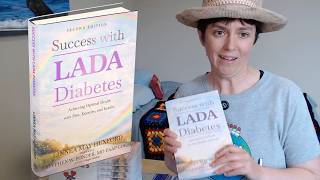 Success with LADA Diabetes 2nd Edition: What’s New and Why It Matters
(watch on YouTube, opens in a new tab)
Success with LADA Diabetes 2nd Edition: What’s New and Why It Matters
(watch on YouTube, opens in a new tab)
-
 5 Surprising Ways to Lower Blood Sugar Naturally
(watch on YouTube, opens in a new tab)
5 Surprising Ways to Lower Blood Sugar Naturally
(watch on YouTube, opens in a new tab)
-
 My LADA Diabetes Journey: From Metformin to Insulin Pump Short
(watch on YouTube, opens in a new tab)
My LADA Diabetes Journey: From Metformin to Insulin Pump Short
(watch on YouTube, opens in a new tab)
Start with These
The questions I get asked most — answered.
-

LADA Diabetes Podcast Interview: Misdiagnosis, Sugar Surfing & Life as an Adult-Onset Type 1
I recently had the pleasure of sitting down with Melissa Slemp, from Type 1 in Midlife to talk about something close to my heart: the confusing, often misdiagnosed world of LADA —…
-

Lingo vs Stelo: Which Over-the-Counter CGM Is Better for LADA, Prediabetes, or the Honeymoon Phase?
Over-the-counter continuous glucose monitors (CGMs) are changing how people catch diabetes early, especially for those questioning LADA or managing blood sugar without insulin. In this article, I compare the two OTC CGMs…
-

How Stressful is Diabetes?
Whether you’re newly diagnosed with diabetes, or have been managing diabetes for years, stress is part of this condition. The constant need to think about diabetes, to make adjustments to your food,…
Take the first step.
Get the LADA Doctor Checklist. Bring it to your next appointment. See what changes when you walk in with the right questions.